The 7 Hidden Risks of Scale-up
The Resolution of COA
The Reality
Conducting large-batch sampling and obtaining a COA is standard practice. However, a standard COA is a macro-level snapshot. When dealing with temperature-sensitive bio-actives across tons of continuous production, micro-deviations in active degradation might not register on standard testing models.
The Architect's Solution
We respect the COA, but we augment it by physically auditing the "mixing parameters" and in-process monitoring data that generate that COA. We upgrade the quality control "resolution" at the source.
The Physics of Thermal Shear
The Reality
Scaling up from a pilot pot to a massive commercial bioreactor fundamentally alters heat distribution physics. The difference in heat-exchange efficiency can unintentionally subject localized materials to excessive thermal shear, destroying actives. This is a complex engineering challenge, not a compliance failure.
The Architect's Solution
We collaborate closely with the factory's engineering team to fine-tune the thermodynamic parameters during scale-up. By conducting thermal mapping, we ensure the lab-scale process is flawlessly replicated.
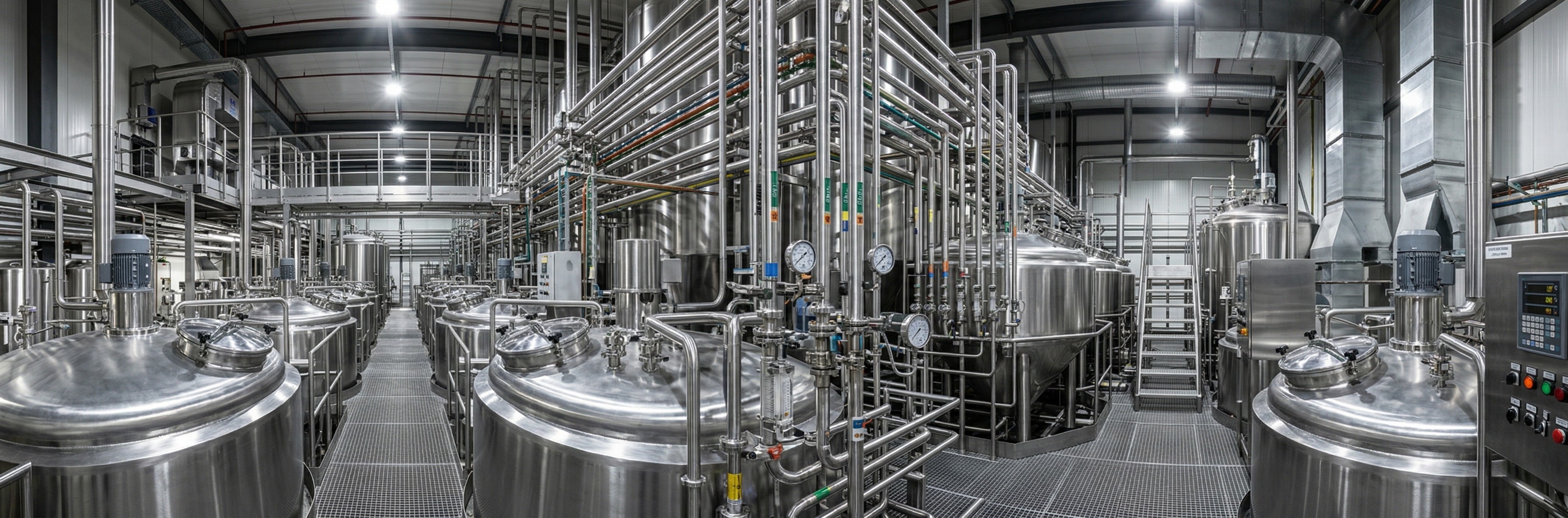
Industrial Scale Reality Check
Zero-distortion thermodynamic scale-up requires precision engineering.
Risks 3 through 7 are Locked
These sections cover the most critical operational blind spots in Global Co-packing Partners—including Unintended Excipient Interference and Translation Friction—and the exact engineering protocols we use to prevent them.
Unlock the Blueprint Below